
Exploring Differences, Similarities, and Stain Comparisons
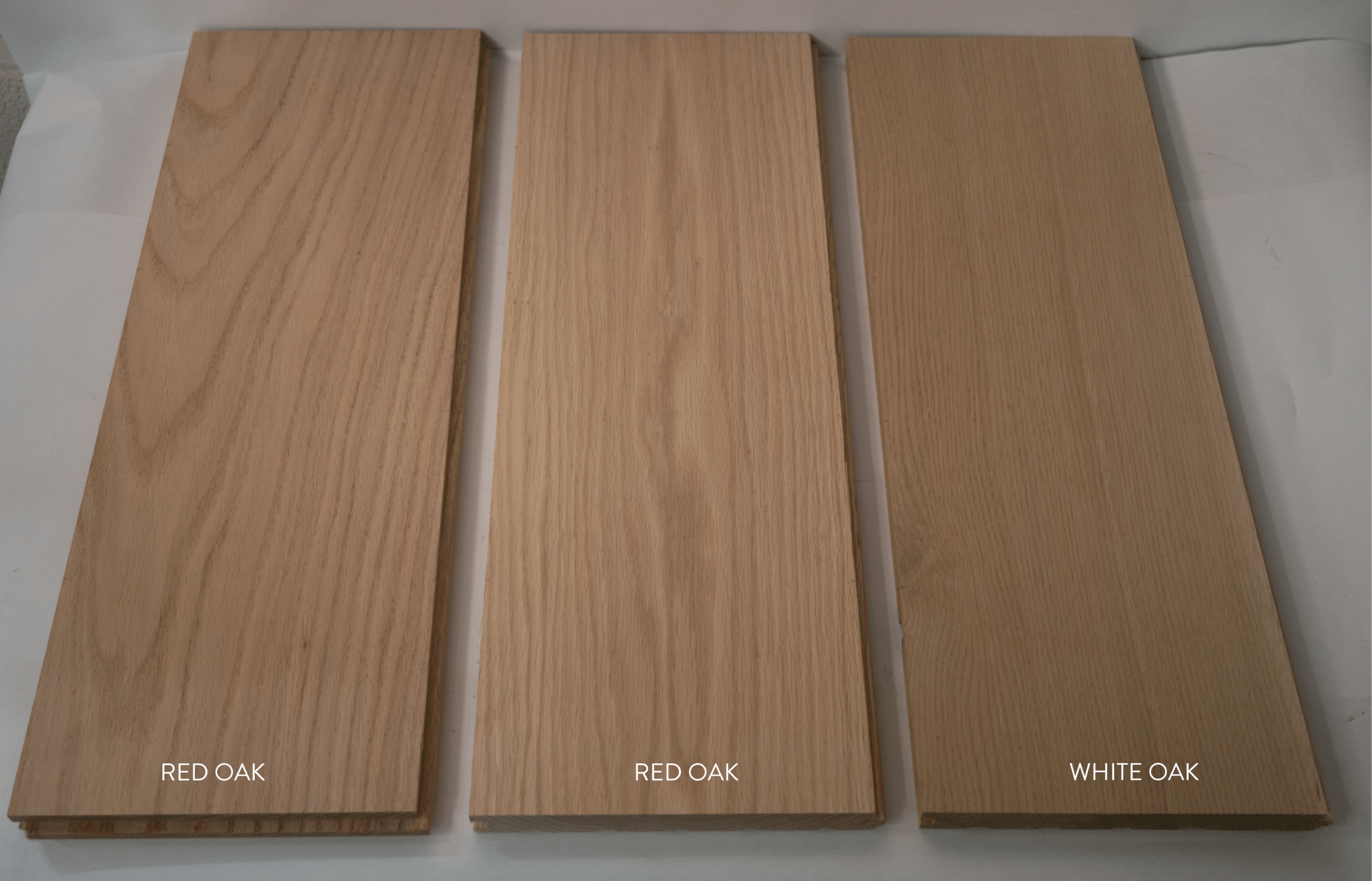
Hardwood flooring serves as a timeless foundation for any space, offering elegance, durability, and versatility. Among the great varieties of options available, White Oak and Red Oak stand out as two popular choices, each with its distinct characteristics and benefits. In this review, we’ll delve into the dissimilarities, similarities, and costs associated with White Oak and Red Oak hardwood flooring, providing you with some of the valuable insights to make an informed decision for your next flooring project.
White Oak Hardwood Flooring:
White Oak is renowned for its durability, density, and timeless beauty. Its name is derived from the light brown to beige hues of its heartwood, often featuring subtle gray undertones. White Oak boasts a tight grain pattern with characteristic rays, imparting a unique visual appeal to any space. Notably, White Oak is prized for its exceptional resilience, making it an ideal choice for high-traffic areas and spaces, such as family rooms, living rooms, kitchens and bathrooms. Its natural resistance to decay and insect infestation further enhances its appeal for flooring applications.

White Oak Live Sawn
Red Oak Hardwood Flooring:
Red Oak is another popular hardwood species known for its versatility, affordability, and warm aesthetic. Despite its name, Red Oak exhibits a range of color variations, including light to medium reddish-brown hues. The wood grain of Red Oak is typically open and prominent, with longer rays than those found in White Oak. Red Oak remains a preferred choice for its strength, stability, and ease of staining.
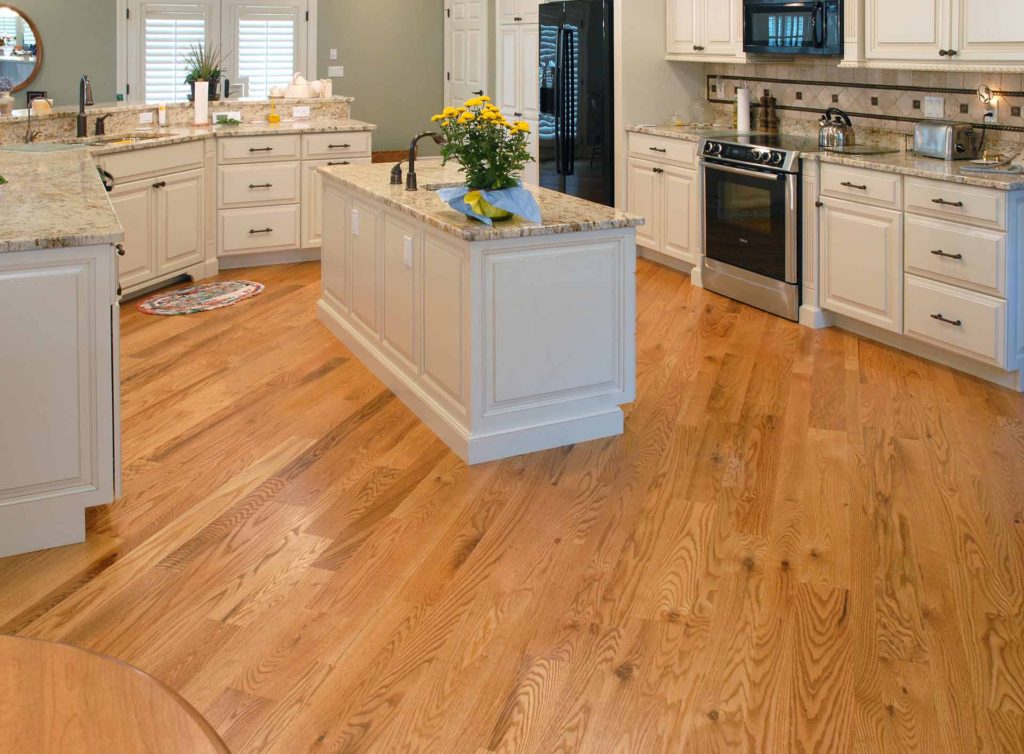
Red Oak Character
Differences and Similarities:
Color and Grain: The most apparent distinction between White Oak and Red Oak lies in their color and grain patterns. White Oak tends to have a more subdued, neutral appearance, while Red Oak features warmer tones and a more pronounced grain.
Density and Durability: White Oak is generally denser and harder than Red Oak, offering superior resistance to wear, denting, and moisture. However, both species are considered hardwood and thus durable choices for residential and commercial flooring projects when properly maintained.
Staining and Finishing: Due to their distinct natural colors, White Oak and Red Oak respond differently to stains and finishes. White Oak tends to accept the stain color chosen more uniformly. Red Oak has a natural red hue, thus it can influence some of the lighter stain colors. In addition, there are different type of Red Oak, Northern Red Oak and Southern Red Oak. Northern Red Oak offers a lot less red tones than Southern Red Oak.
Solid and Engineered: Both White Oak and Red Oak are available in solid or engineered form. The thickness of solid or engineered can vary. The most desired unfinished thickness for solid or engineered is ¾”. Solid can be used “on” or “above grade”, Engineered can be used “below”, “on”, or “above grade”. When choosing engineered, be sure to look at the thickness of the wear layer; the thicker, the better (5.25 mm offers the same wear layer as ¾” solid.)
Cost Comparison:
White Oak Hardwood Flooring: On average, White Oak hardwood flooring is more expensive than Red Oak. Factors such as grade, width, length, finish, and manufacturer can influence the overall cost.
Red Oak Hardwood Flooring: Red Oak hardwood flooring materials are typically priced lower than White Oak, Availability, grade, width, length, finish, and supplier are key factors affecting the cost.
Factors Affecting Cost:
Grade: Both White Oak and Red Oak hardwood flooring are available in various grades, with higher grades commanding higher prices due to fewer character marks. However, depending on the design element, character grade flooring can be more desirable. For example, character grade would be more desirable in a rustic coastal/mountain environment. In addition, character grade can offer a busier floor design, thus hiding a lot of everyday maintenance concerns. Clear grade flooring may show more dust and dirt. (Similar to the auto industry, white/black vehicles tend to show more dirt than various shades of gray.)
Width and Length: The wider or longer the flooring, the costlier the flooring. However, the overall design and beauty of hardwood flooring is enhanced with the varying lengths and pure randomness of flooring pattern. Thus, varying lengths, including some shorter boards will surely add to the random appeal. It’s very tough and time consuming to add randomness to flooring when all the boards are longer or the same length.
Finish: The type of finish applied to the hardwood flooring can impact its cost, with pre-finished options being more expensive upfront but potentially saving on installation costs. However, your design options are limited to the colors and gloss levels offered by the factory. Unfinished flooring can be customized to any sheen, design, or color that you can imagine.
Installation: Labor costs for installation vary depending on factors such as project complexity, subfloor condition, and geographic location. Hiring professional installers may add to the overall cost but ensures quality installation.
In conclusion, White Oak and Red Oak hardwood flooring offer distinct aesthetics, performance characteristics, and price points, catering to diverse design preferences and budgets. Whether you prioritize the timeless style of White Oak or the warmth of Red Oak, hardwood flooring remains a valuable investment that adds beauty and value to any space. By understanding the differences, similarities, and costs associated with these hardwood options, you can confidently choose the perfect flooring solution for your needs.
Click here to view more information about our Hardwood Flooring options!