
Hardwood flooring is a natural product, celebrated for its unique beauty and variability. However, this same natural quality can lead to coloration inconsistencies and photosensitivity—two factors every homeowner and installer should understand. Below, we explore why these phenomena occur and how they can be managed, using insights from the National Wood Flooring Association (NWFA) Technical Guide.
Top Causes of Hardwood Flooring Color Changes
- Natural Aging and Patina Development Hardwood flooring’s appearance evolves over time. This process, often referred to as patina, occurs as finishes and wood species naturally amber, yellow, or darken. This is particularly common with oil-based finishes and certain wood species like Cherry and Walnut.
- Light Exposure Direct sunlight can significantly alter a floor’s color. UV rays may cause some finishes to fade or lighten, while others may darken. Homeowners should expect noticeable differences in areas exposed to sunlight compared to those covered by rugs or furniture.
- Finish and Stain Interactions
- Aniline Dyes: These are not colorfast and may fade significantly over time.
- Improper Applications: When finishes are applied over uncured coatings or stains, it can result in color bleeding or inconsistent coloration.
- Water-Based Over Oil-Based Finishes: Sanding through an oil-based sealer during the intercoat abrasion process before applying a water-based finish can create uneven coloration.
- Environmental and Chemical Factors Chemical exposure, such as urine or cleaning products, and even incompatible area rug pads can discolor finishes. Additionally, improper cleaning methods or products can lead to a dull or uneven appearance over time.
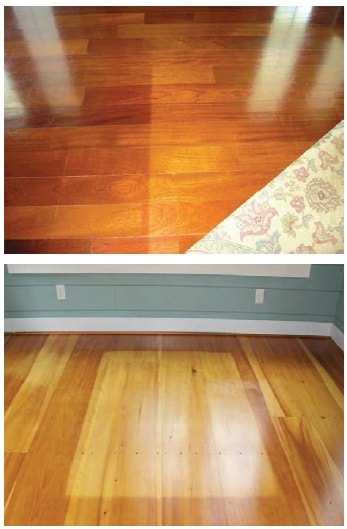
Photosensitivity and Its Impact on Wood Flooring
Photosensitivity refers to a wood’s reaction to light exposure, which can vary by species. Here is a brief overview of all the species we have at Sheoga Hardwood flooring, and check out our species specifications cards on each species webpage for more information:
- Beech: Photosensitivity: Low-to-Moderate. Beech slightly ambers with age and exposure to sunlight and oxygen. When steamed, it naturally darkens.
- Cherry: Photosensitivity: High. Cherry darkens to a deep reddish-brown with age and exposure to sunlight and oxygen. The color change is most drastic within the first 90 days after exposure to light. Afterward, the darkening process slows but never completely stops.
- Hickory: Photosensitivity: Low. Hickory slightly ambers with age and prolonged exposure to sunlight and oxygen.
- Maple: Photosensitivity: Low. Maple slightly ambers with age and exposure to sunlight and oxygen.
- Red Oak: Photosensitivity: Low. Red Oak lightens with age and exposure to sunlight and oxygen.
- Walnut: Photosensitivity: Moderate to High. Walnut lightens with age and exposure to sunlight and oxygen.
- White Oak: Photosensitivity: Low. White Oak lightens with age and exposure to sunlight and oxygen.
Understanding these tendencies is essential when selecting wood flooring and planning your home’s interior design.
Managing and Minimizing Color Variations
- Preventative Measures
- Use window treatments like blinds or UV-filtering films to limit direct sunlight exposure.
- Regularly move area rugs and furniture to ensure even light exposure across the floor.
- Maintenance Tips
- Follow manufacturer-recommended cleaning protocols and products.
- Restoration Options
- Recoating: For minor discoloration, a recoat can restore uniformity.
- Sanding and Refinishing: Significant discoloration may require a complete resand and refinish.
- Isolation Repairs: Small, discolored areas may be repaired without needing a full refinishing process.
Setting Realistic Expectations
It’s crucial to understand that no two pieces of hardwood are identical. Coloration differences, light sensitivity, and natural aging are part of the charm of real wood flooring. Setting realistic expectations and working with experienced professionals can help ensure a beautiful and enduring result.
Why Choose Sheoga Hardwood Flooring?
At Sheoga Hardwood Flooring, we embrace the natural character of wood while providing expert guidance on species selection and finish options to suit your lifestyle. Whether you’re choosing a highly photosensitive Cherry or a stable White Oak, our team is here to help you achieve your vision. Explore our collection of prefinished and custom options to find the perfect floor for your home.
For more insights and expert advice on maintaining your hardwood flooring, visit our Sheoga Blog or contact us directly. Discover how to manage hardwood flooring color changes and photosensitivity with expert tips and insights from Sheoga Hardwood Flooring.
Hardwood Flooring Options